Steadying a Wandering Mind
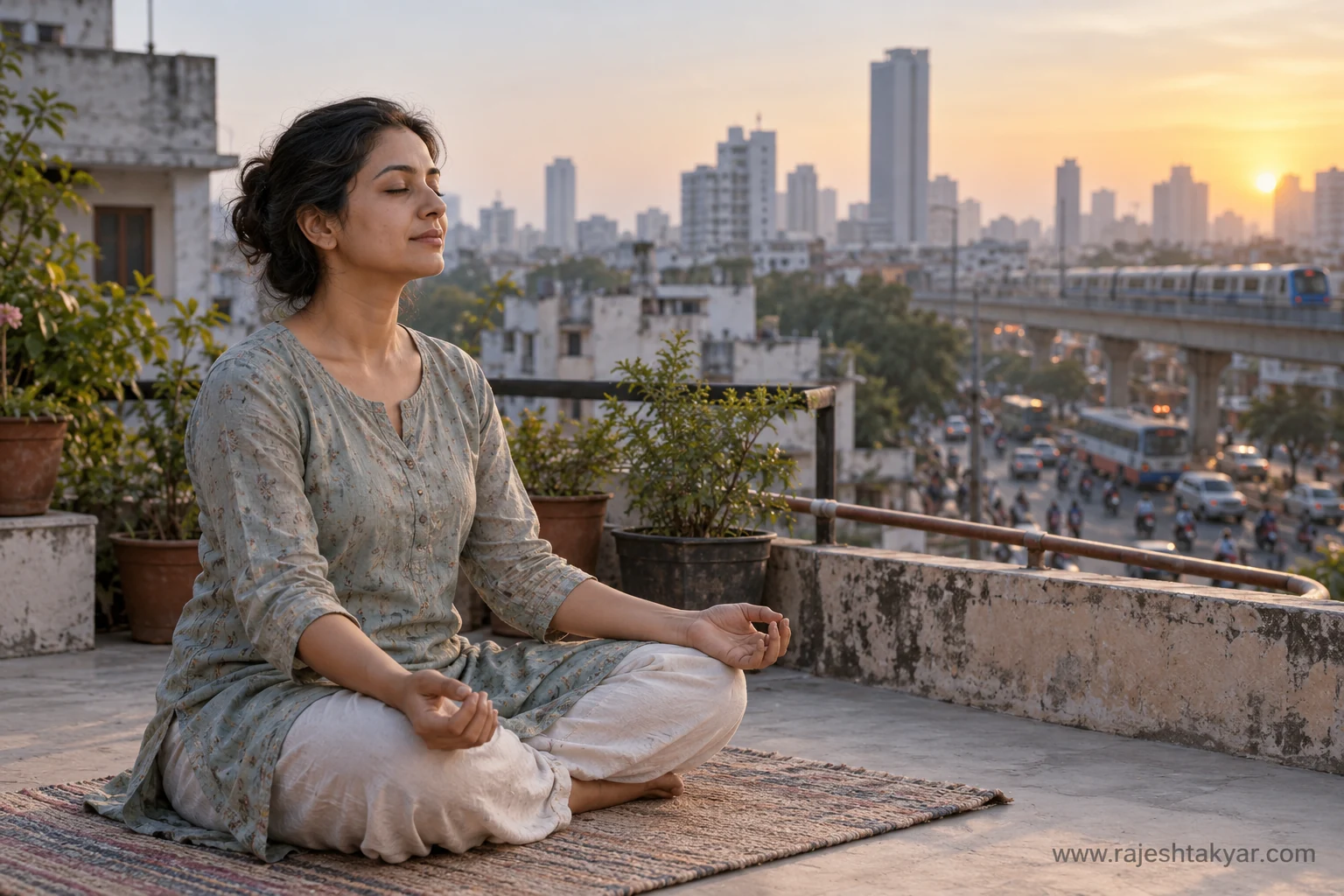
As soon as we sit down to meditate, an old memory may arise, followed by unfinished work or anxiety about the future. We may then conclude that we are not fit to meditate at all. This verse from the Gita gives that discouragement a different meaning. Recognising that the mind has wandered can itself be the beginning of awareness. The next step is to bring it back patiently.
Understanding the Wandering Mind
This is verse 26 in Part 6 of the Shrimad Bhagavad Gita. Here, भगवान श्रीकृष्ण explains to Arjuna the greatest challenge of meditation, or self-restraint, and its solution: how to bring the restless mind back to the Self repeatedly.
First, कृष्ण says, 'मनश्चञ्चलमस्थिरम्': O Bharata, the mind is by nature restless and unsteady. It runs towards the past, the future, sensory desires and imagined situations. This becomes the greatest difficulty during meditation. The human mind is remarkable. It is here one moment and somewhere else the next. If that very mind is brought under control, a practitioner of Karma Yoga can attain God. If it remains unrestrained, it continues to cause bondage and suffering. It runs into the past, becomes entangled in worries about the future, is attracted to sensory desires and loses itself in an imagined world. This is why the mind becomes the greatest challenge when a person sits down to meditate.
One of the mind's first habits is to wander into the past as soon as meditation begins. It recalls old events repeatedly, becoming entangled in pleasant experiences or saddened by painful episodes. It also loses itself in worries about the future, continually imagining what is to come. What will happen tomorrow? Is the future secure? These worries prevent steadiness and disturb the practitioner's meditation. If nothing else occupies it, the mind begins to feel the attraction of sensory desires: delicious food, wealth, fame or some form of sensory pleasure. All these draw it away, and it runs towards them repeatedly. At times, it loses itself in imagination. The mind can construct an imaginary world at any moment. A person sitting in meditation may imagine travelling somewhere or possessing a particular object.
Returning Repeatedly Is the Practice
The mind is the greatest difficulty in meditation, while meditation means steadying the mind at one point. Its natural instability therefore becomes the central challenge. A person closes their eyes and wishes to meditate on God, but the mind moves towards old memories. Meditation then cannot deepen, and the practitioner repeatedly becomes discouraged by the mind's apparent refusal to settle.
The practitioner must first understand that the mind's restlessness is natural. Just as the wind's movement does not simply stop, the mind does not become steady without practice. Expecting it to become quiet immediately upon sitting down is a misunderstanding. Meditation is a practice, and the mind gradually comes under control. Attention should also be given to the practices that support steadiness. First, attend to the breath. Observing its movement and feeling its rhythm gradually helps the mind concentrate. Regularity makes this easier. Meditating at the same time each day helps the mind develop a habit. Satsang and good thoughts also matter: company shapes the mind's direction. Good thoughts and the company of saints make restraint easier. A balanced way of life also supports the practitioner. Bringing food, sleep and work into balance can create favourable conditions for practice.
One comparison describes the mind as a monkey. A monkey jumps from one branch to another, just as the mind moves from one thought to the next. As a monkey can gradually be trained, the mind can be restrained through practice. While waves continue to rise, the sea does not appear still; when they become quiet, its depth becomes visible. Meditation is the condition in which the waves of the mind become quiet. A lamp's flame trembles when the wind blows. Similarly, meditation cannot become steady while the mind sways among sensory objects and imagined situations. When the wind stops, the flame stands upright. In the same way, the mind becomes steady in meditation when desires and worries subside.
The straightforward approach to restraining the mind is to maintain practice and patience. Practice means bringing the mind back to meditation repeatedly. Even if it wanders a thousand times, the practitioner brings it back patiently. Patience means refusing to become discouraged. Gradually, the mind understands that running outside will not give it what it seeks, and it begins to learn how to remain within.
Awareness in Daily Life
As the mind becomes restrained, meditation begins to deepen. The practitioner experiences peace within. The light of the Self begins to reveal itself, and the mind grows free from pleasure and pain, past and future. This state comes through continuous practice. Although restlessness and instability are natural to the mind, there is no need for despair. Practice, restraint and patience can gradually bring it under control. When the mind becomes steady, meditation deepens and the practitioner experiences the Self. This state gives life its true happiness and peace; this is the direction of the spiritual reflection presented here.
'यतो यतो निश्चरति': wherever the mind runs, whether towards sensory objects, desires, fear or memories, the practitioner should remain aware. 'ततो ततो नियम्य' means that the practitioner has a duty to restrain the mind repeatedly. If it wanders ten times, it must be brought back ten times. Spiritual practice means continuous effort and patience.
'आत्मन्येव वशं नयेत्': ultimately, the mind must be made steady in the Self. When it rests there, samadhi and peace are attained. This becomes possible through practice and continuous effort. The essence of practice is to bring the mind back to the Self repeatedly. Its restlessness is its nature, rather than a fault, and that nature can change gradually. The true practitioner's firmness lies in continually bringing the mind back. This reveals the significance of sustained practice and detachment. Repeatedly returning the mind is the key to success in the yoga of meditation.
A Small Practice and a Continual Return
There is no need to begin on a grand scale to put this thought into practice. Choose a few quiet minutes. Sit comfortably and rest your attention on a simple support, such as the natural movement of the breath or remembrance of a name you hold dear. When thoughts arise, do not immediately become angry with yourself. First recognise where attention has gone, and then gently return to the chosen support. Give importance to this process of returning instead of trying to stop thoughts by force.
Suppose that shortly after sitting down, you remember an old disagreement. The mind begins constructing a conversation, and you start answering someone in your imagination. As soon as you notice this, acknowledge inwardly that a memory has arisen, and return to the present practice. There is no need to count victories and defeats. Recognising the wandering and returning is the practice of that moment.
The same awareness is useful in conversation and work. If the mind begins preparing an answer while you are listening to someone, return your attention to what that person is saying. If your eyes move forward while reading but you lose the meaning, pause and read the paragraph again. If you keep picking up your phone without a reason during work, recognise the habit and put it aside. These ordinary opportunities also develop the ability to bring the mind back.
Do not turn practice into a new means of comparing yourself with others. Hearing about another person's experience and then belittling your own practice can itself be a form of wandering. Regularity means returning in a way suited to your circumstances, rather than becoming rigid. If you miss a day, begin again simply at the next opportunity. The reassurance of this verse is that a restless mind is not excluded from spiritual practice. We move forward with that very mind, patiently returning again and again.
Instead of judging the mind harshly during meditation, help it return as a patient companion would. This gentleness in regular practice can offer an opportunity to begin again after discouragement and to accept your own experience.
Book reference: Shrimad Bhagavad Gita — Atma-Sanyam (Hindi edition)


Comments
Post a Comment